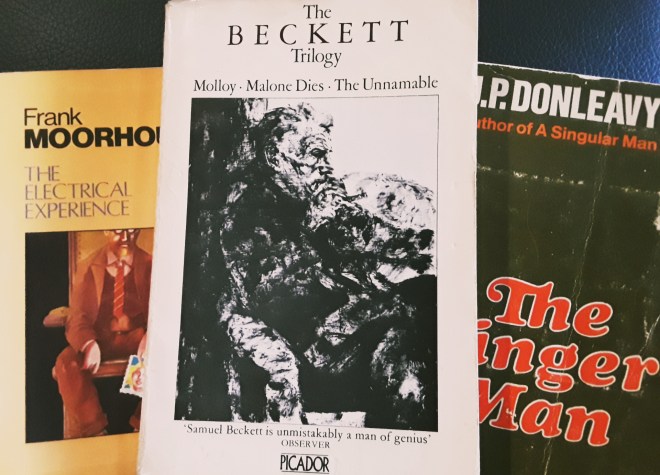
Author’s should not write in bubble, the works we read should influence how we write. Here are three of the books that influenced my own.
Molloy
Molloy is one of my favourite novels. It bridges the gap between modernist and postmodern literature, challenging the reader to both empathize with and revile the central characters, who’s interconnection creates a constant feeling dread and violence.
Molloy inspired me to write without the fear of the need for closure. The focus of my book was to tell a story, as a snapshot of the life of the main character, without judgement of their actions or their motivations. I think I captured, however, given this was my first novel I was still keen to provide a clear ending.
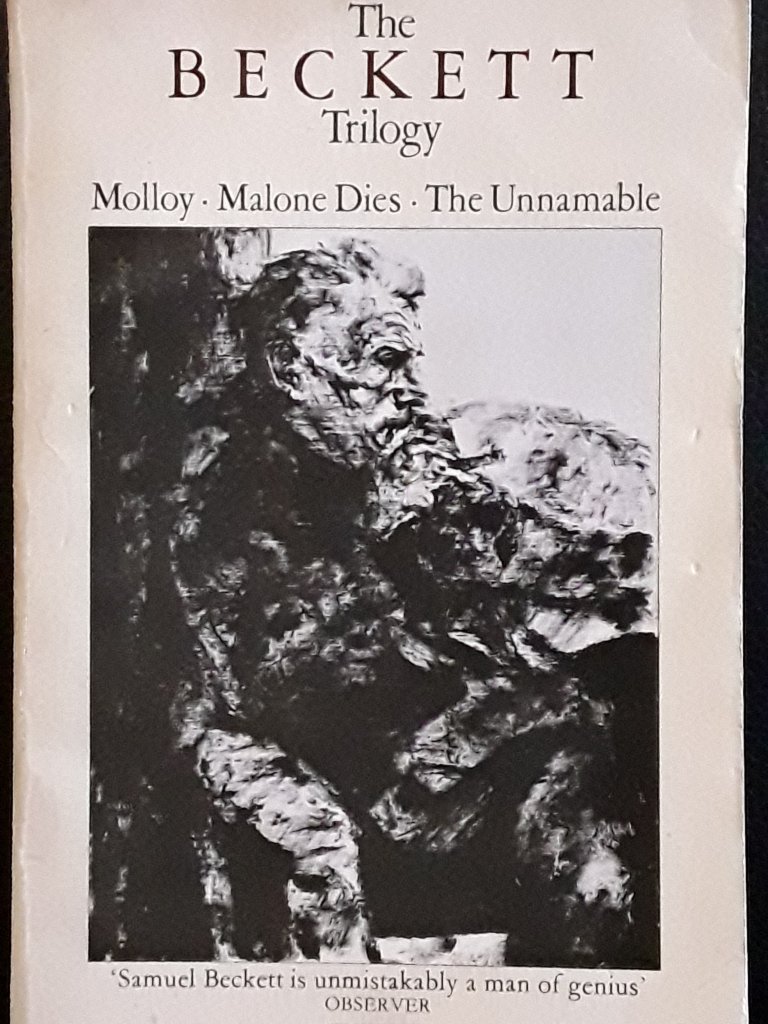
I also tried to incorporate the feeling of dread into my novel. I wanted to evoke a sense of rising unease throughout, without giving readers to many conclusive leads. Like Beckett, I wanted to create some empathy for my eponymous character, with a growing disquiet about the path the character was descending on.
I wholly suggest reading Molloy, if you have a good afternoon to get through the whole thing. The style lends itself to being a read in an entire sitting. It can be a challenge at times and you won’t get a pleasant payoff, but it is worth the effort.
The Gingerbread man
JP Donleavy’s dark comedy tells the story of a drunken lecher who treats everyone like trash. Yes it’s another dark read, yes the characters are very hard to like and in some cases do things that are shameful and objectively bad, but Donleavy tries to show how these actions are natural and how the characters are deeply flawed. The characters reflect the utter disjointed narratives of a normal life, the desires of normal people and the habits of…well most people.
I was inspired by the way the dialogue flowed between the characters. It drew me in and made me realise that the ‘he said’, ‘she said’ method of writing dialogue can get in the way of the natural flow of language. The dialogue is barely mapped out, but you can see how the conversation flows between Donleavy’s characters. It created the impression that I was passing stranger or a neighbour stuck beyond the wall of a noisy couple next door.
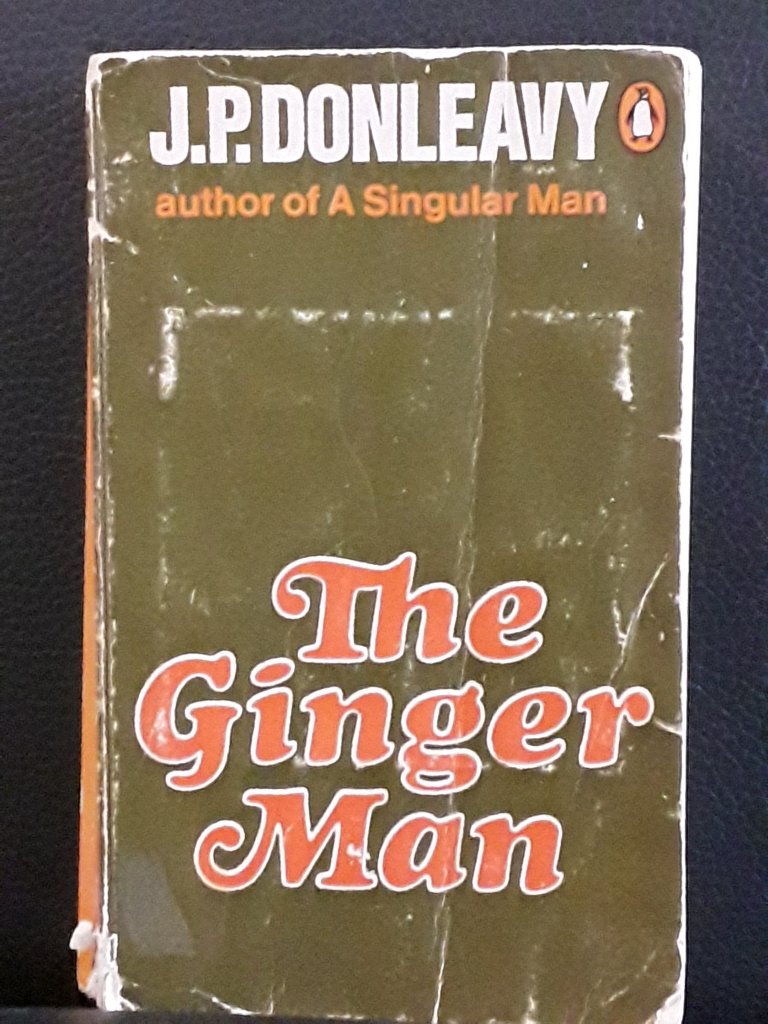
I tried to incorporate this feeling of free flowing language into Glen the Cockroach. I wanted to capture the way people interact with each other, without thinking, without narration, just pure natural language that showed intimacy, fear and failure. I also wanted to capture the space between words without having to constantly narrate how that space appears. I wanted the space to be a part of the conversation as it often is in a conversation.
While I thoroughly enjoyed reading The Ginger Man, I think you need to be in a good headspace to enjoy it properly. The characters ate not up to the politically correct standard that some people look for in their literature. It’s also very hard to empathize with the characters, because they are just so unpleasant. However, I realised that many of the things that I found unpleasant I could recognise within myself.
The Electrical Experience
This novel is weird, it’s wonderful, it’s beautifully sad, but it is weird. The central plot tells a story of a self-made businessman who is trying to become an influential person within his society. As the story continues becomes clear that an influential man is only influential while he can maintain his power over himself and others.
When I first read Frank Moorhouse’s ‘discontinous narrative’ it convinced me that the novel was not simply something to be written and read, but presented and experienced. The Electrical Experience tells the story of cultural shift in Australia by slapping the reader around the face with visual turns, tricks and splashes of colour.
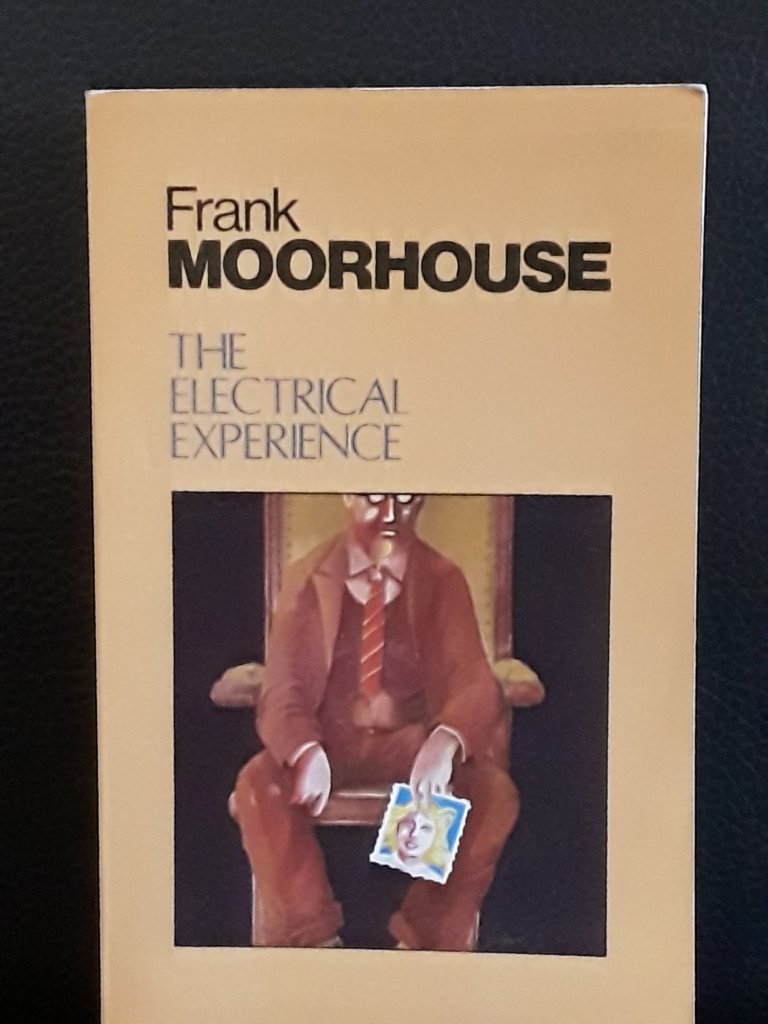
I was inspired by the way the novel was broken apart by the visual elements, changes in shade and almost absent chapter breaks. I tried to emulate this style in my own book, pulling out some tricks that placed the reader behind the eyes of the main character. I wasn’t able to get everything into my novel (I think I will release a complete digital version in future that will incorporate all of the elements that I had originally intended), however, printing is not cheap and I felt that I could lean well enough on my writing to keep people engaged
That’s it…
There are other books that inspired my novel but none like these three. You can but all of these at your friendly local online store and you can check out my book, Glen the Cockroach, here- https://tighearnanjkelly.com/publications/
 Tighearnan John Kelly
Interesting backstory. You are absolutely right in saying no writer should write in a bubble. Inspired writing is a form of alchemy using ingredients that are both common and profound, sourced from a world of experience, and crafted with the combined skills of science and magic.